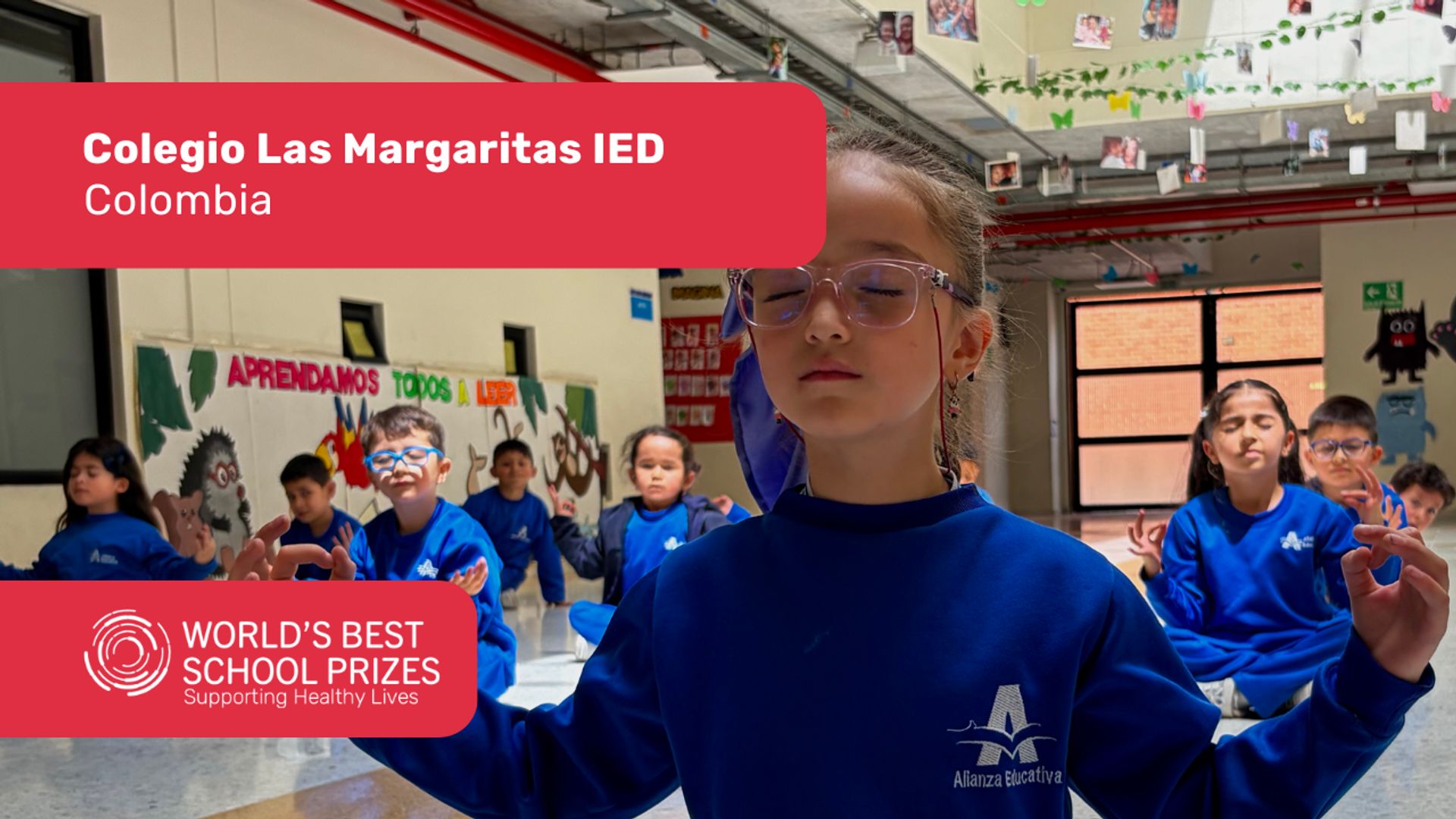
Colegio Las Margaritas IED
- Bogotá D.C., Cundinamarca, Colombia
- The Colombian school that has reduced severe school conflicts by 85% by rethinking how students process emotion
-
Colegio Las Margaritas IED, part of the Alianza Educativa´s network, a public kindergarten, primary and secondary school in Bogotá D.C., Cundinamarca, Colombia, is transforming how student wellbeing and conflict are managed by replacing punishment with prevention, using a structured socio-emotional model that is reshaping school culture in one of the city’s most complex urban communities. In this low-income region, many students face social instability and social strain. In 2023, internal wellbeing assessments revealed the scale of the challenge. Nearly 20% of students reported suicidal ideation, over 30% showed self-injurious behaviours, and many struggled with family dynamics that affected their ability to manage conflict.
After realising that traditional punishment-based discipline within the education system were not able to practically confront these challenges, the school made a deliberate shift and redesigned its approach to one of coexistence through its creation of the Socio-Emotional Shelter, “Margarita: we walk in herds”. The structured, daily operating space was designed to help students regulate emotions, resolve conflict and ask for proactive support before social incidents have the chance to escalate beyond their control.
Designed to put the core pillars of strong academic learning and socio-emotional development first, the shelter acts as both a physical space and a learning system. Access is voluntary, and students are encouraged to manage their emotions as part of a mediated process when conflicts arise. Entry is structured, requiring students to name and describe their needs so that support is intentional and monitored, turning moments of tension into opportunities for discussion, self-regulation and resolution, instead of punishment.
What makes the model so effective is that it is student-led. Through a partnership with the Bogotá Chamber of Commerce, learners are trained as certified mediators, equipped with the skills to facilitate peer-to-peer conflict resolution. Between 2023 and 2025, 119 students were certified, with additional cohorts in training. These mediators now play an active role in daily school life, forming a peer support system that young people can trust, identify with and turn to in their most vulnerable moments. Conflict is resolved quickly without the need for formal discipline structures, with the number of mediated minor conflicts increasing significantly, from 34 cases in 2024 to over 230 in 2025, highlighting that more issues are being addressed early.
Academically, the school is showing strong performance and currently ranks fifth out of 46 schools in the Kennedy locality. It also maintains performance levels high above other schools within the network.
Teachers undergo five weeks of training that covers academic and socio-emotional aspects so that they can capably apply this learning into their classroom practice, with consistent support through structured programmes and ongoing professional development. This ensures a shared language around emotion, conflict and care is part of their everyday pedagogy. They are also encouraged to use the shelter for their own regulation and reflection as a personal support space.
Since implementation, the school has experienced a visible shift in culture. Students are accessing the shelter before conflicts begin, giving them ownership of their behaviour. Classrooms are calmer, recidivism has declined, and peer-to-peer mediation has now become a way of life on campus.
Parents report improvements in emotional regulation, communication and engagement, and less friction in the home, including how children respond to challenging situations. This connection between the school environment and home environment has significantly strengthened the support system for the learners.
The approach also aligns with Colombia’s evolving education policy, which now mandates the integration of socio-emotional learning into school systems. By acting ahead of regulation and building a structured, data-driven model, Colegio Las Margaritas IED has positioned itself as a practical example of how these policies can be implemented effectively in low-resource settings.